Modular Workforce Camp Buildings: Buyer’s Guide for Mining & Remote Projects
Sep 07, 2026
Modular Workforce Camp Buildings: Buyer’s Guide for Mining & Remote Projects
Mining, energy, and large infrastructure projects often take place in remote locations where traditional construction is slow, expensive, and logistically difficult. Workforce accommodation must be ready quickly, durable enough for harsh conditions, and flexible enough to expand or relocate as the project evolves.
This is why modular workforce camp buildings have become the preferred solution for many project owners and contractors worldwide. This guide explains what modular camp buildings are, how they compare with traditional construction, what to look for when selecting a supplier, and real-world project examples.
What Are Modular Workforce Camp Buildings?
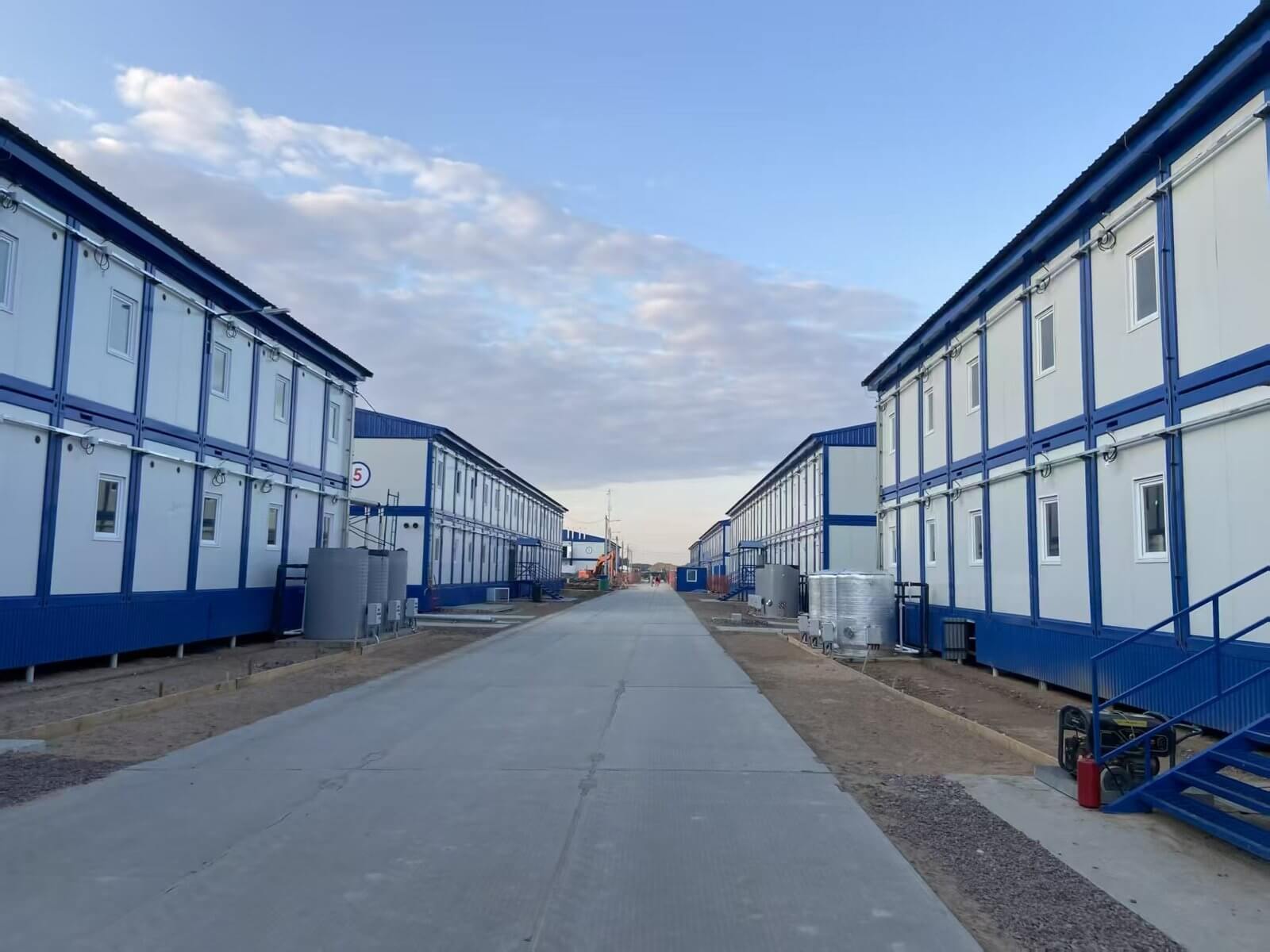
Modular workforce camp buildings are factory-produced accommodation and support units designed specifically for temporary or semi-permanent use on remote sites. They typically include:
Sleeping units (single or multi-occupancy)
Ablution blocks (showers and toilets)
Dining halls and kitchens
Offices and meeting rooms
Recreation and medical facilities
Laundry and storage modules
These units are manufactured in a controlled factory environment, then transported to site in flat-pack, expandable, or fully volumetric form. Once on site, they are assembled with minimal heavy equipment and connected to utilities.
Common types used in mining and remote projects include:
Flat-pack container houses (high shipping efficiency)
Expandable container houses (more living space after deployment)
Multi-storey modular office and accommodation blocks
Custom steel-structure camp complexes
Because most of the work happens in the factory, quality control is higher and on-site labour requirements are significantly lower than traditional construction.
Modular Camp Buildings vs Traditional Construction: Time and Cost Comparison
The biggest advantages of modular solutions appear in remote or time-sensitive projects.
Time Comparison
Aspect
Modular Camp Buildings
Traditional Construction
Manufacturing
4–8 weeks (factory)
Parallel with site work
On-site assembly
Days to a few weeks
Months
Typical total timeline
8–16 weeks from order to occupancy
6–18 months or longer
Weather impact
Minimal (factory-controlled)
High
Ability to work in parallel
Yes (factory + site prep)
Limited
In many mining projects, modular camps can be fully operational in under four months, while traditional builds often take a year or more.
Cost Comparison
Modular buildings usually deliver 20–50% lower total project cost in remote locations for several reasons:
Reduced on-site labour (often 50–70% less)
Lower material waste (factory precision)
Faster occupancy → earlier project start
Predictable pricing with fewer change orders
Reusability and residual value after the project ends
Traditional construction in remote areas carries high risks of cost overruns due to weather delays, skilled labour shortages, and long material supply chains. Modular solutions shift most of these risks to the controlled factory environment.
Other Key Advantages
Easy expansion or reduction of capacity
Relocatable to future project sites
Read More



 IPv6 network supported
 English
 Français
 Deutsch
 Русский
 Italiano
 Español
 Português
 Türk
Türk Ελληνικά
 Indonesia
 عربي
عربي


