Prefab Container Houses in the Saudi Arabia Market
Jan 16, 2025
Prefab Container Houses in the Saudi Arabia Market
Opportunities, challenges and what it takes to succeed
The Saudi Arabian market offers real opportunities for prefab container house suppliers. Large infrastructure programs, expanding industrial cities and workforce camps create steady demand for modular accommodation. But it is by no means an easy “gold rush” — international competition is strong, and only companies with genuine product capability, service support and a long-term commitment to the market can establish themselves. This article outlines what it takes to succeed there.
1. Why Saudi Arabia Is an Attractive Market
Several factors drive demand for modular buildings in Saudi Arabia:
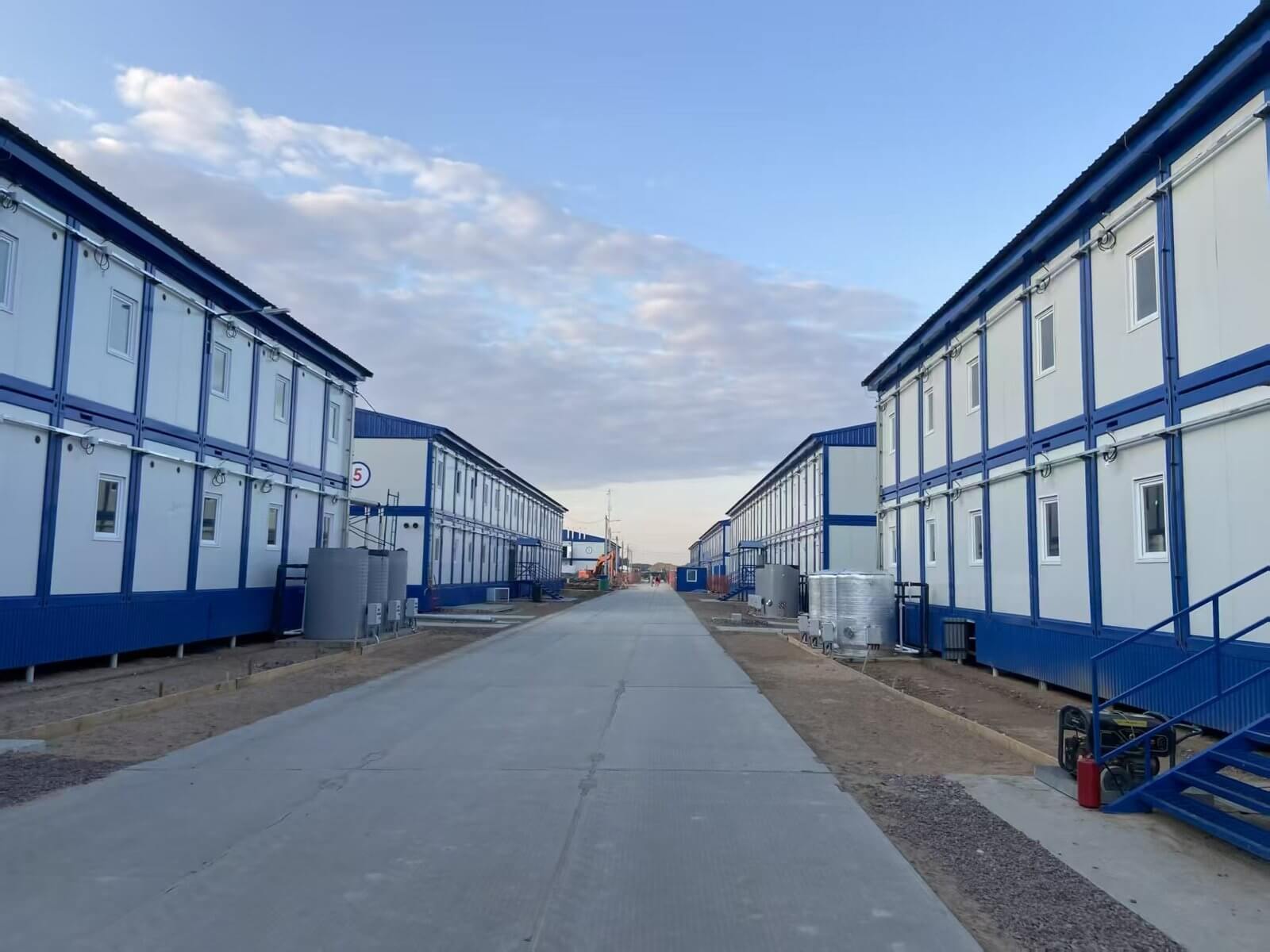
Large-scale projects: Infrastructure, industrial and energy projects need workforce camps, site offices and support facilities at scale.
Fast deployment: Prefab and container units can be delivered and installed faster than conventional buildings, which suits project-driven demand.
Relocatable assets: Units can be moved between project sites, making them an efficient investment for contractors with multiple projects.
Harsh climate requirements: High temperatures and dusty conditions place real demands on insulation, ventilation and cooling, which is exactly where a well-specified modular unit adds value.
2. What Buyers in the Region Look For
Buyers in Saudi Arabia typically evaluate suppliers on:
Hot-climate performance: Insulation levels, roof design and cooling provision must be matched to the local temperature range.
Compliance and documentation: Export documentation, technical specifications and certification files that support local approval processes.
Delivery reliability: Consistent lead times and organized logistics for sea freight and inland transport.
Installation support: Clear assembly guidance and, where required, on-site supervision for larger camps.
After-sales service: Spare parts, maintenance guidance and a responsive point of contact after delivery.
3. The Core Competitiveness Required
To establish a foothold in the Saudi market, a supplier needs:
Localization adaptation: Understand local demand and optimize product performance for high-temperature and hot-climate environments.
Service advantages: Not just sell products, but support projects with a reliable service system and rapid response.
Brand value: Build a recognizable brand and earn market trust through consistent product quality and value.
Supply chain efficiency: Optimize every step from production to delivery, controlling cost while keeping the supply chain responsive and stable.
Project experience: Demonstrate relevant references from camps and modular projects so buyers can verify capability.
4. What to Confirm Before Buying Modular Units for Saudi Projects
Climate specification: Confirm insulation, roof and cooling options are sized for the site’s summer conditions.
Site access and transport: Check delivery route, port of entry, and whether lifting equipment is available on site.
Code and approval requirements: Confirm which local standards apply and what documentation the authority will ask for.
Camp layout: Provide the room schedule and site plan so units can be configured and connected correctly.
Timeline and quantity: Confirm production lead time after deposit and the delivery schedule for phased construction.
Planning modular accommodation for a project in the Middle East? Contact us with your site conditions, unit quantity and delivery requirements, and our team will help you plan a specification suited to the local climate.
{
"@context": "https://schema.org",
"@type": "BlogPosting",
"headline": "Prefab Container Houses in the Saudi Arabia Market",
"description": "Opportunities and challenges for prefab container house suppliers in Saudi Arabia: market drivers, buyer expectations, core competitiveness and buying guidance.",
"image": "https://www.gdwbprefabhouse.com/storage/uploads/images/202501/16/1737013138_WvK6pwAbpE.jpg",
"author": {
"@type": "Organization",
"name": "Guangdong Wanbang Modular Building Co., Ltd."
},
"publisher": {
"@type": "Organization",
"name": "Guangdong Wanbang Modular Building Co., Ltd."
},
"mainEntityOfPage": {
"@type": "WebPage",
"@id": "https://www.gdwbprefabhouse.com/"
}
}
Read More



 IPv6 network supported
 English
 Français
 Deutsch
 Русский
 Italiano
 Español
 Português
 Türk
Türk Ελληνικά
 Indonesia
 عربي
عربي


