
Importing container houses from China runs in seven steps: define the use case and unit type, confirm drawings and configuration, agree commercial terms, follow production and quality checks, approve the packing and container-loading plan, ship and clear customs, then install on site. Most delays and cost overruns happen at steps two and five — unclear specifications and an unplanned loading plan — not at sea.
This guide covers the parts a manufacturer controls and can document. Customs classification, duty rates and local building approvals vary by destination and change frequently; for those, your freight forwarder and local certifier are the authority.
The phrase “container house” covers three different products with very different logistics. Choose before you ask for a quote, otherwise you will compare prices for different things.
| Type | Best for | Logistics character |
|---|---|---|
| Quick-assembly flat-pack | Camp offices, dormitories, welfare rooms, multi-unit blocks | Ships as loose parts; highest loading density; assembled on site |
| Folding container | Projects that relocate often; rapid deployment | Ships pre-assembled and folded; unfolds on site |
| Double-wing expandable | Fewer, larger self-contained living units | Ships folded; unfolds to full width; lowest loading density |
Ask the factory for the dimension drawing of the exact model you are buying, in both transport and in-use states. Do not plan a site layout from a brochure size — confirm it against the drawing before production.
A supplier can only quote accurately once the configuration is fixed. Confirm the items that change cost and compliance:
Wanbang's flat-pack line uses a high-strength galvanized steel frame with rock-wool sandwich panels that provide thermal insulation, fire resistance and moisture resistance — the specification to request in writing if your site is hot, humid, or remote.
Get every term in the contract, not in a chat message. The commercial fields published on Wanbang product pages are a useful reference for what to expect in writing: minimum order quantity of one unit, payment structured as 50% deposit and 50% before shipment, shipment from Nansha port (other Chinese ports available), and a published lead time of 10–15 days. Confirm the actual figures for your order and model in the contract — lead time depends on configuration and quantity.
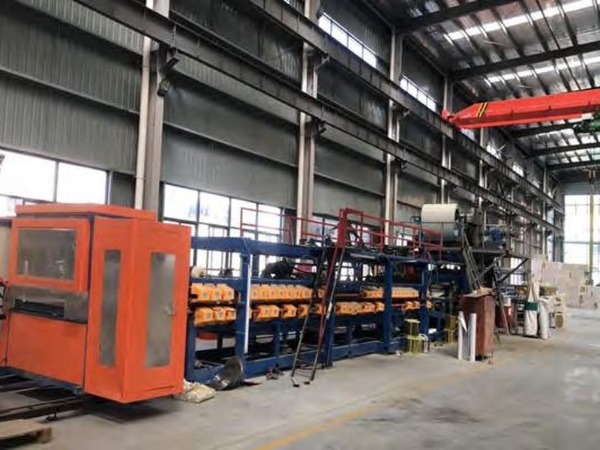
Ask for evidence at three points: mid-production photos, pre-packing inspection, and container-loading photos. Wanbang documents inspection at each production stage and reports a 100% finished-product pass rate. If your project value or local compliance risk is significant, appoint an independent inspector before the balance payment.
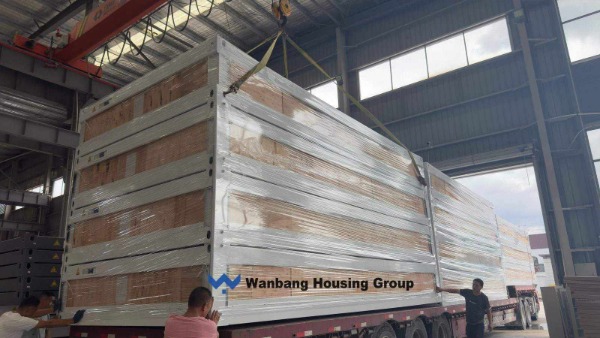
The loading plan decides your freight cost per unit. Ask how many units fit in a 40HQ, how much is pre-assembled in the factory versus assembled on site, and what goes into each container.
| Packing method | Approx. units per 40HQ | Trade-off |
|---|---|---|
| Loose parts (knock-down) | ≈ 14 sets | Lowest freight per unit; more site assembly |
| Pre-assembled packing | ≈ 10 sets | Less site work; higher freight per unit |
| Pre-assembled, stacked | ≈ 6 sets | Least site work; highest freight per unit |
Figures above are Wanbang's published loading data for the flat-pack product line and vary by wall panel thickness and model — treat them as a planning baseline and confirm against your final specification.
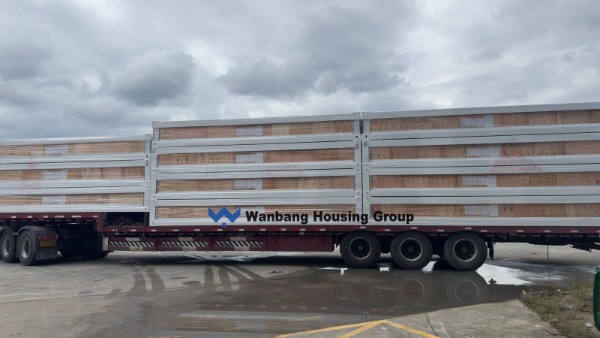
Sea freight is standard for container houses; your forwarder selects between FCL and other options based on unit dimensions. Prepare the usual export set — commercial invoice, packing list, bill of lading and certificate of origin — and confirm document requirements with your forwarder.
On customs, duties and local approvals: HS classification, duty rates, and building-approval or certification requirements differ by country and change often. Confirm them with your licensed customs broker, freight forwarder or local certifier before shipment. A manufacturer can supply product documentation and test data, but should not be your source for duty rates or local code compliance.
Installation planning starts before the ship leaves: prepare the foundation, confirm crane access if required, and agree who provides the local crew. Support scope varies by product:
Ask the factory what comes in the box: drawings, installation manuals, instructional video, and remote guidance during your first units.
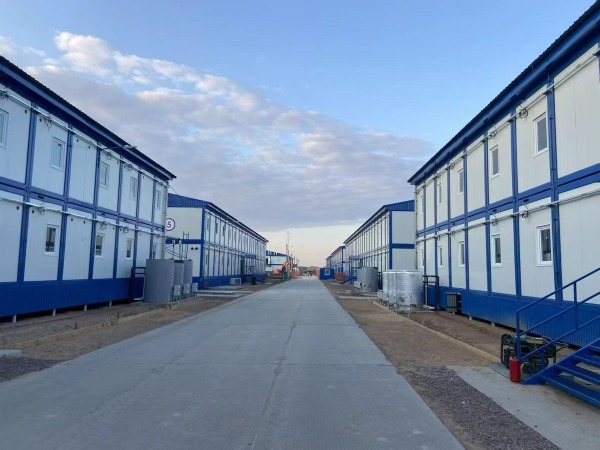
For Wanbang's flat-pack line, published figures are about 14 sets per 40HQ shipped as loose parts, roughly 10 sets pre-assembled, and about 6 sets pre-assembled and stacked. Confirm against your model and wall panel thickness — the packing method is the variable that matters.
A quick-assembly flat-pack unit takes about 4 workers around 3 hours with no welding and no crane. A folding unit unfolds in 4 steps in roughly 15 minutes. Site preparation and foundation work are separate from these figures.
Not for the quick-assembly flat-pack system, which is designed for bolted assembly without welding or crane lift. Folding and expandable units are lifted into position and then unfolded — confirm the requirement for your model before the container arrives.
The structure published on Wanbang product pages is 50% deposit with 50% balance before shipment. Always confirm the exact terms, currency and incoterms in the contract.
Your freight forwarder or licensed customs broker. The factory provides commercial and technical documents; duty rates, HS classification and local approvals must be confirmed locally, as they vary by country and change over time.
Planning an import? Contact Wanbang for a specification sheet, packing plan and installation documentation for your project.
Contact: Jade · Tel: +86 13312807790 · WhatsApp: +966 50 2737 116 · Email: Jade.li@gdwbhouse.com


 IPv6 network supported
Hi! Click one of our members below to chat on
 English
 Français
 Deutsch
 Русский
 Italiano
 Español
 Português
 Türk
Türk Ελληνικά
 Indonesia
 عربي
عربي


