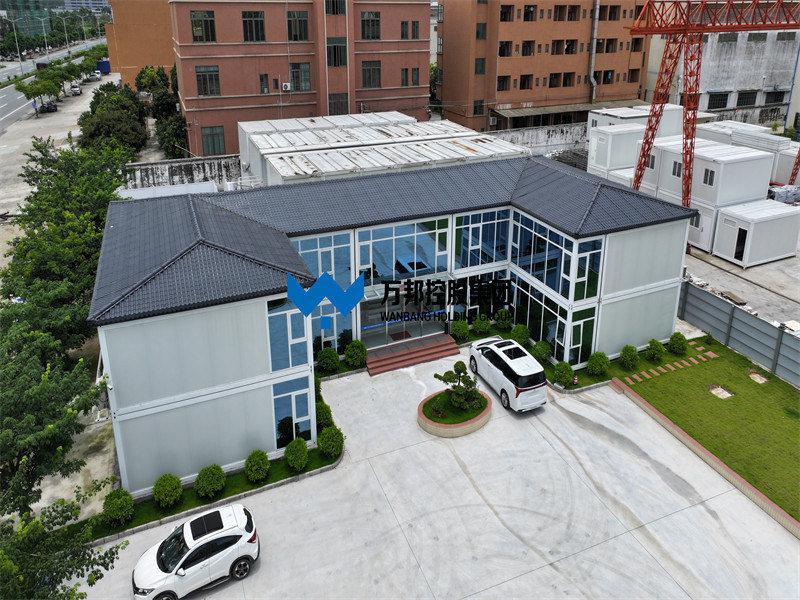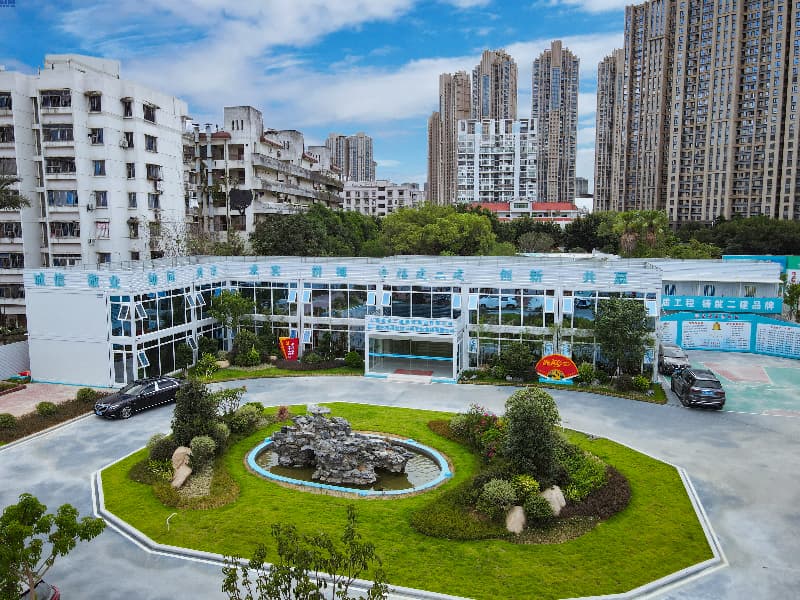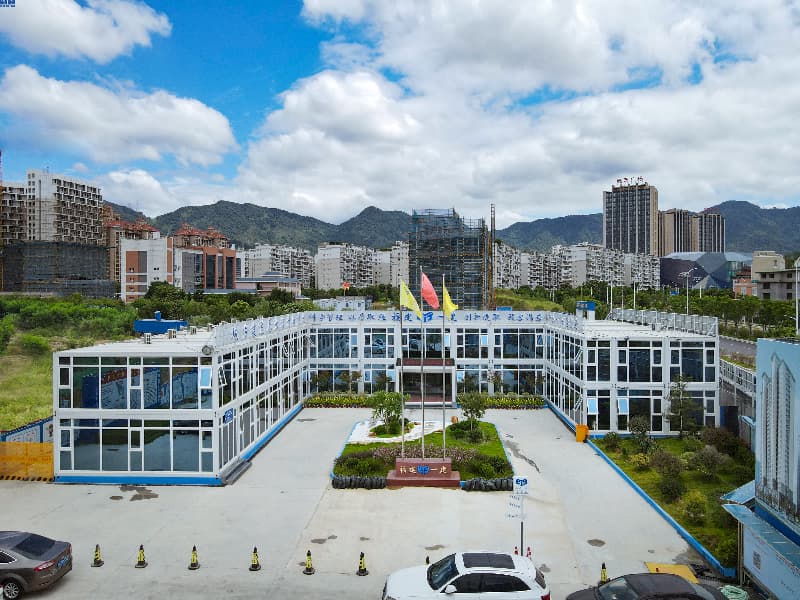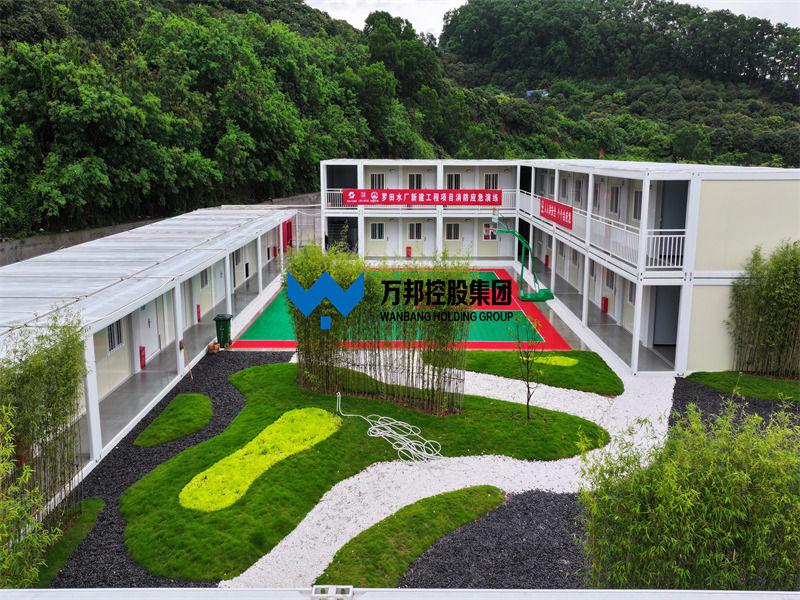
Five Wanbang camps, five climates, five different sets of specifications. A camp in the humid steel belt of West Africa fails for different reasons than a camp on the edge of the Atacama Desert, and a camp built for a tropical nickel island is not specified the same way as one standing in the heat and dust of Iraq. What follows is what each of the five sites actually required, and the numbers each project was delivered against.
The projects below were delivered for a steel plant, a nickel industrial park, a power transmission scheme, a mining camp and an energy company living compound. Every figure is drawn from the project records for each site.
The five reference projects span Africa, Asia and South America, and range from 150 units on one site to more than 2,000 on another. Listed in order of delivery scale:
| Project | Location | Scale delivered | Condition the camp had to handle |
|---|---|---|---|
| Hengxing Steel Plant | Lagos State, Nigeria | 360 units — 340 quick-assembly + 20 flat-pack | Persistent heat and high humidity |
| Tsingshan Holding Group | Sulawesi, Indonesia | 2,000+ units, housing 10,000 people | Tropical island climate, single-batch scale |
| G15 Power Transmission | Atacama Desert, Chile | 150 integrated housing units | High-altitude desert: temperature swings, UV, wind |
| Zamboanga Nickel Mining Camp | Zamboanga, Philippines | 500+ units, living base for 1,000 | Hot and humid air, corrosion risk |
| VAN Project | Iraq | 5,050 m² floor area, up to 1,000 people | High temperature, dust, complex site conditions |
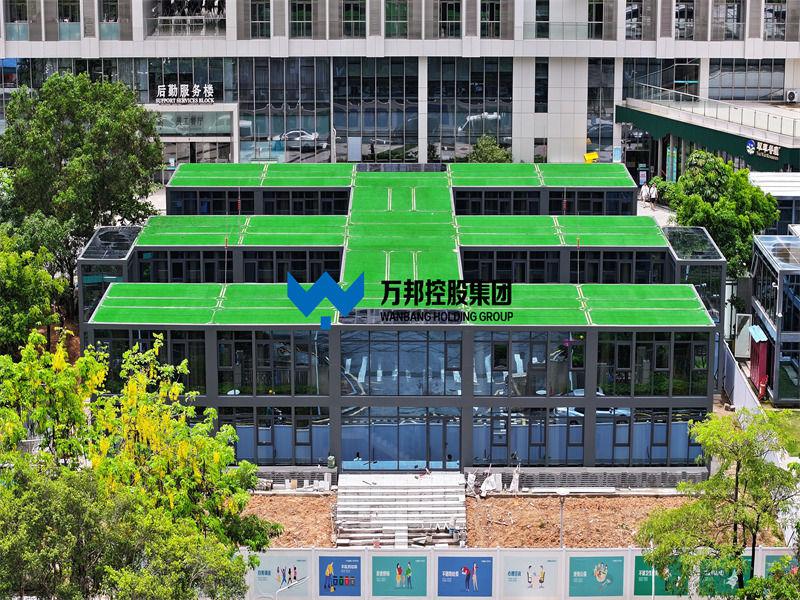
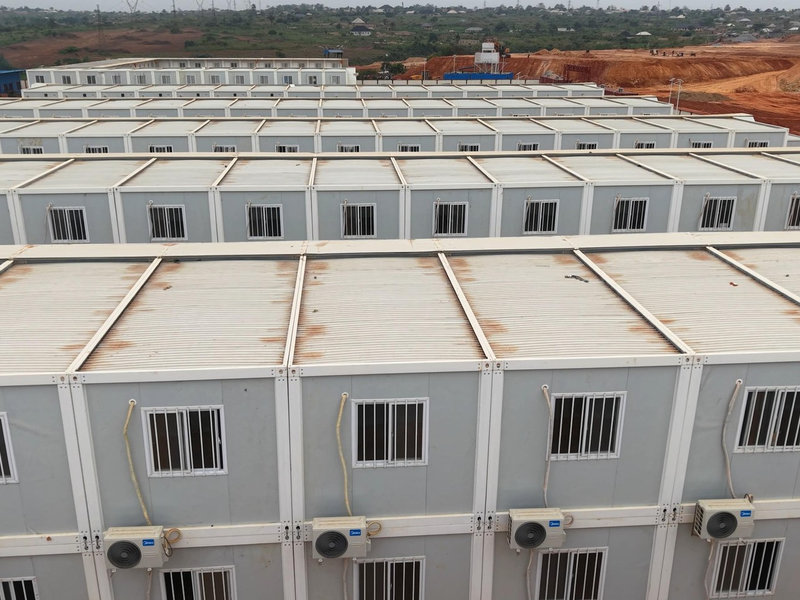
The Hengxing Steel Plant project in Lagos State needed a staff living compound for the plant workforce, and it needed it operating early. The camp was delivered as 360 units in total, comprising 340 quick-assembly container houses and 20 flat-pack container houses, with water and electrical systems pre-installed before the units left the factory.
Two decisions shaped this camp. The first was the unit split — a large quick-assembly block for volume accommodation, plus a smaller number of premium flat-pack units. The second was pre-installed building services, which removes the water and electrical fit-out from the critical path on site.
The stated outcomes for the project were fast on-site assembly, resistance to high temperature and high humidity, and early operation to meet the plant's commissioning schedule.
Nigeria, Lagos State — 360 units, of which 340 quick-assembly and 20 flat-pack, with pre-installed water and electrical systems.
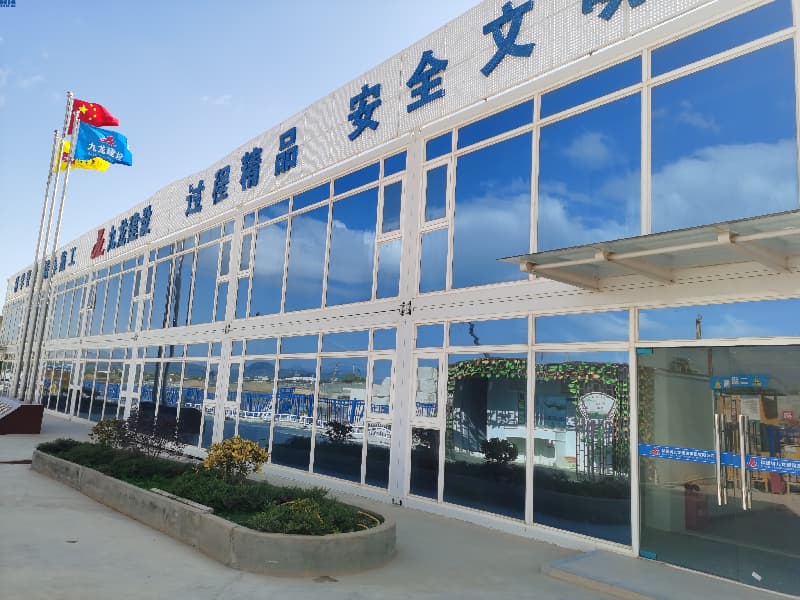
The Tsingshan Holding Group project in Sulawesi is the largest camp in the record: over 2,000 units delivered in a single batch, creating a living base capable of housing 10,000 people. It functions as an integrated complex combining staff accommodation, administrative offices and full-range living amenities for a global nickel mining industrial park.
The product mix was custom flat-pack containers combined with shipping containers, with pre-integrated restroom, water and power supply — described in the project record as an industrialised, move-in-ready living experience.
Speed came from splitting the work between factory and site rather than from working longer on site. The project record credits full industry-chain coordination — factory prefabrication plus on-site assembly — with rapid deployment of thousands of units completed within 30 days.
A camp for 10,000 people, delivered as a single batch to a tropical island industrial park.
2,000+ units in a single batch, pre-integrated restroom, water and power, assembled on site in 30 days.
The G15 power transmission project placed its camp in the Atacama Desert. The site sits at high altitude, where the daily temperature swing is extreme, ultraviolet radiation is intense and strong winds are a permanent design condition rather than a seasonal event. The buildings specified for it had to deliver thermal insulation and wind resistance together.
The camp totals 150 integrated housing units, covering offices, accommodation, a canteen and supporting functional zones. Two figures stand out on this project:
Modular materials on this project are reusable, which the project record links to an environmentally friendly, low-carbon outcome.
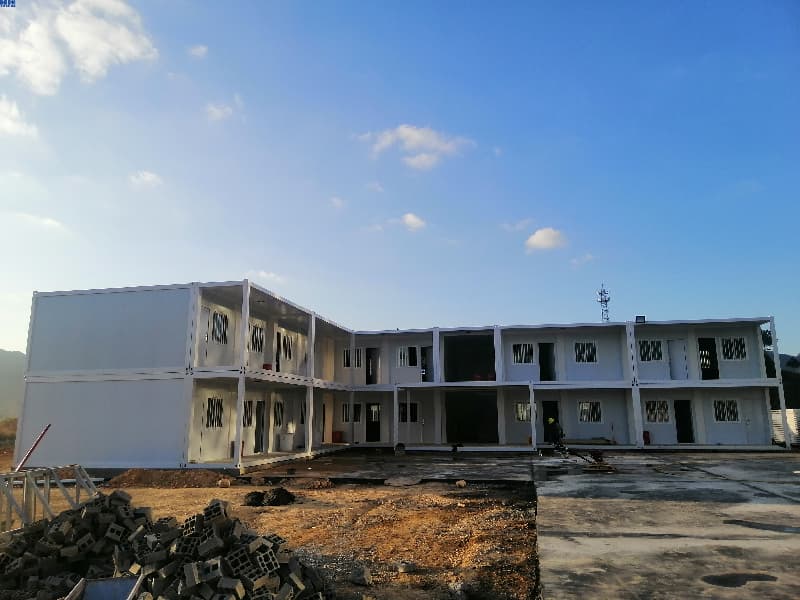
The Zamboanga nickel mining camp delivered more than 500 standard container units, creating a large living base for 1,000 personnel. High-strength flat-pack container structures were used with integrated water and electrical pipelines, completed by factory prefabrication followed by on-site assembly.
Functionally the camp is a full settlement rather than a row of units: four-person dormitories, administration buildings, a canteen and supporting sanitation facilities, with clear functional zoning. On site, modular quick-assembly container houses were combined with K-type prefabricated housing units.
Two features of this camp are worth noting for anyone planning a similar site. The structures are treated for corrosion and rust resistance to suit the hot, humid climate, and the camp requires no concrete foundation — the project record attributes a 40% reduction in construction time to that.
Philippines, Zamboanga — 500+ units for 1,000 personnel, no concrete foundation required, construction time reduced by 40%.
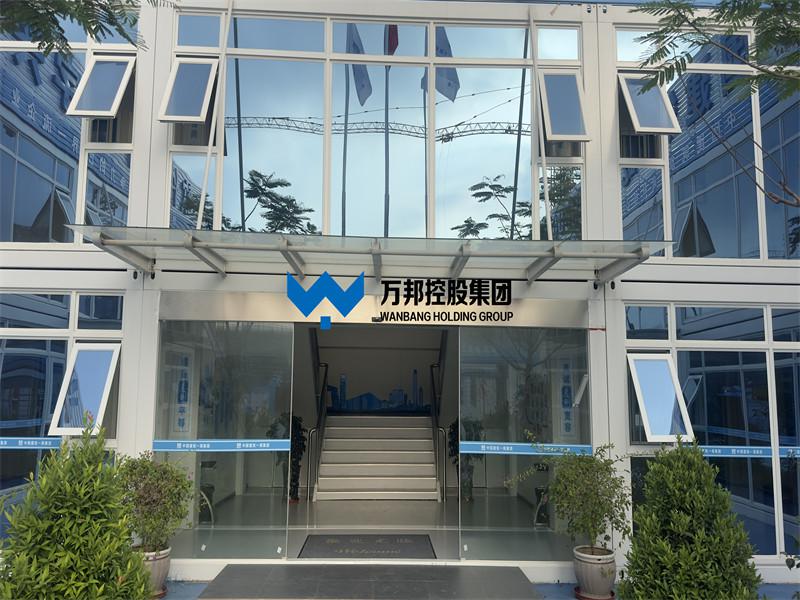
The VAN project in Iraq was specified for a site with high temperature, heavy dust and complex construction conditions. The camp was built from custom light-gauge steel prefabricated houses with a modular plug-in assembly system, reaching a total floor area of 5,050 m² and capable of housing up to 1,000 personnel.
It serves as a fully integrated living compound for the employees of a major energy company, combining accommodation, dining, office facilities and recreational spaces. The project record highlights two results: proven fast-track delivery and structural stability in high-temperature, sand-laden conditions.
Read together, the five projects point to four things that decide how a remote workforce camp turns out.
Chile ran a factory prefabrication rate above 90%. Indonesia and the Philippines both delivered on a factory-prefabrication-then-on-site-assembly model, and Nigeria pre-installed water and electrical systems before shipping. The more work that moves into the factory, the less site labour and site time the camp consumes.
In Indonesia, rapid deployment of thousands of units was completed within 30 days. In Chile the project achieved a 48-hour rapid deployment response. In Nigeria the camp was required to be operating early to meet the plant's commissioning schedule. Each of these was a requirement the project was planned against.
Heat and humidity in Nigeria and the Philippines drove humidity resistance and anti-corrosion, anti-rust treatment. The high-altitude Atacama Desert drove thermal insulation and wind resistance. The heat-and-dust conditions in Iraq drove structural stability and fast-track delivery. The same unit built to one climate's requirements is the wrong unit for another.
Every one of the five projects was delivered as accommodation plus offices plus food service plus sanitation, with clearly separated functional zones. Indonesia is described as a living base for 10,000 people; Iraq as a compound combining accommodation, dining, offices and recreation. The unit is the building block, the camp is the deliverable.
The flat-pack and quick-assembly container house share a standard 6,055 mm × 2,990 mm × 2,896 mm unit. The foldable container house unfolds to 5,900 mm × 2,500 mm × 2,470 mm.
Yes. The Zamboanga nickel mining camp in the Philippines required no concrete foundation, which the project record links to a 40% reduction in construction time.
At the largest single-batch project on record, over 2,000 units were delivered and rapid deployment of thousands of units was completed within 30 days. The Chile transmission project achieved a 48-hour rapid deployment response.
Quick-assembly container houses, flat-pack container houses, foldable options, and K-type prefabricated housing units. The mix is chosen per site: volume accommodation, a premium finish, or frequent relocation each point to a different unit.


 IPv6 network supported
Hi! Click one of our members below to chat on
 English
 Français
 Deutsch
 Русский
 Italiano
 Español
 Português
 Türk
Türk Ελληνικά
 Indonesia
 عربي
عربي