
Choosing the right insulation material is one of the most important decisions when designing a modular building for extreme climates. Whether a project is located in a freezing mining region, a hot desert, a humid tropical area, or a coastal industrial site, the insulation system directly affects indoor comfort, energy consumption, moisture control, and long-term building performance.
So, what insulation materials are best for modular buildings in extreme climates? Rock wool is often a strong choice where fire resistance and thermal stability are priorities. Polyurethane (PU) offers excellent thermal insulation performance where high insulation efficiency within limited panel thickness is important. Expanded Polystyrene (EPS) is a lightweight and economical option for projects with more moderate performance requirements.
For container-based modular buildings, however, choosing the insulation core is only part of the decision. Panel thickness, roof insulation, wall joints, floor construction, window performance, and ventilation must work together. Guangdong Wanbang Modular Building Co., Ltd. (Wanbang) considers these factors when configuring modular accommodation for mining camps, oilfield projects, construction sites, and other demanding environments.
Unlike conventional buildings with thick masonry walls, container-based modular buildings generally use lightweight steel frames and insulated sandwich panels. Steel is strong and suitable for modular construction, but it also conducts heat readily. Without an appropriately designed insulation system, indoor temperatures can change quickly when outdoor conditions become extreme.
In cold climates, insufficient insulation allows indoor heat to escape through walls, roofs, floors, and poorly sealed connections. Heating systems must work harder to maintain comfortable temperatures.
In hot climates, solar radiation heats the roof and exterior surfaces. If the insulation system is inadequate, this heat can transfer into the occupied space, increasing air-conditioning demand.
In humid environments, temperature differences between indoor and outdoor surfaces can create condensation. Moisture trapped inside wall or roof assemblies may contribute to corrosion, mold growth, and deterioration of building materials.
A properly designed modular building insulation system should therefore achieve several objectives:
For remote workforce accommodation, these factors are especially important because employees may live inside the units for extended periods under challenging environmental conditions.
Three commonly considered insulation materials for modular container buildings are Rock Wool, Polyurethane (PU), and Expanded Polystyrene (EPS). Each has different thermal, fire, weight, moisture, and cost characteristics.
Rock wool, also known as mineral wool, is manufactured from natural mineral materials such as basalt. Its fibrous structure provides thermal insulation and sound absorption, while suitable non-combustible rock wool products offer strong fire performance.
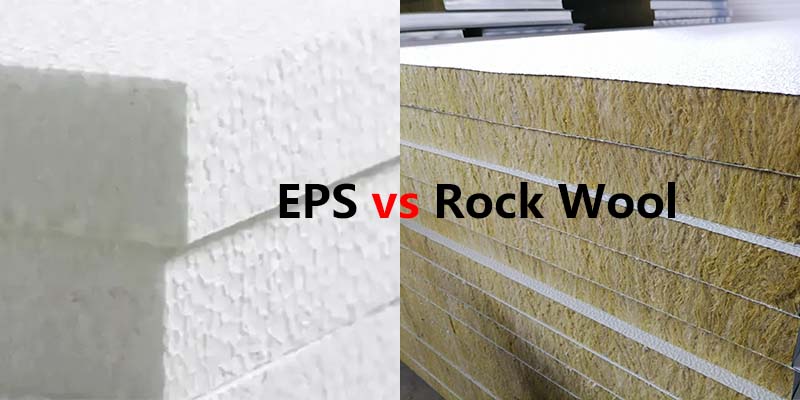
Why consider rock wool?
Rock wool is particularly worth considering for mining accommodation, oilfield facilities, industrial camps, and multi-storey modular buildings where fire performance is a major design consideration.
However, buyers should not assume that every rock wool panel automatically achieves the same fire classification. The complete panel assembly, facings, adhesives, joints, and supporting test documentation must be checked. Proper moisture protection is also necessary because water entering the insulation assembly can reduce its performance.
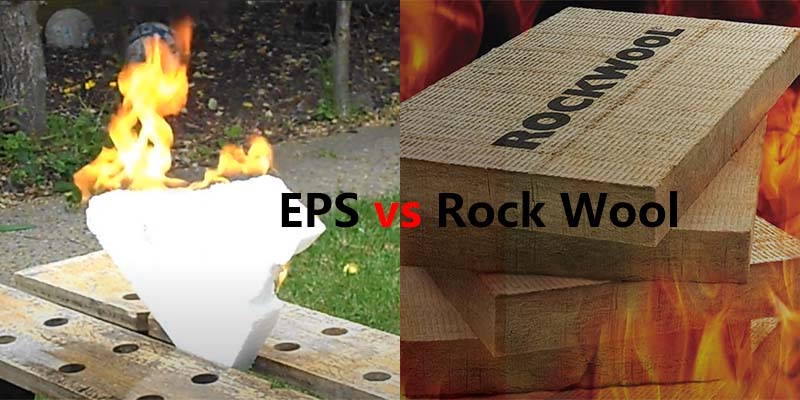
For projects where non-combustible insulation is required, buyers can discuss rock wool sandwich panel configurations when selecting Wanbang flat pack modular buildings. The final panel specification should be confirmed according to the applicable project fire requirements.
Polyurethane (PU) insulation is widely used in building applications where strong thermal resistance is needed without significantly increasing wall or roof thickness.
Compared with many conventional insulation materials, PU generally offers lower thermal conductivity per unit thickness. This makes it useful for modular buildings where internal floor area, transportation weight, and panel dimensions need to be carefully balanced.
Main advantages of PU insulation include:
For cold-weather workforce accommodation, PU can be considered where maintaining indoor temperatures is a priority. In hot regions, it can also help reduce external heat entering the building.
However, PU insulation is not automatically the best choice for every project. Its fire performance depends on the formulation, facing materials, and complete panel assembly. Buyers should request the relevant fire-test documentation rather than relying only on the insulation material name.
When comparing PU and rock wool, the decision should consider thermal conductivity, required thickness, fire performance, panel weight, and total project cost rather than comparing insulation materials by price alone.
Expanded Polystyrene (EPS) is a lightweight rigid foam insulation material commonly used in sandwich panels for modular buildings and container houses.
Its relatively low weight and affordable cost make it attractive for projects where transportation efficiency and initial investment are important considerations.
Key characteristics of EPS include:
EPS can be considered for temporary site offices, accommodation units, and projects in relatively moderate climates. It may also be suitable for certain hot or cold environments when the complete building design provides adequate insulation and protection.
Its limitations should also be considered. EPS is combustible unless appropriately formulated and tested as part of a compliant assembly. It can also be affected by moisture entering damaged or poorly sealed panel joints. Therefore, it should not be selected solely because of its lower purchase price.
For buyers comparing different 20ft expandable container house configurations, the insulation core, panel thickness, fire requirements, and destination climate should all be confirmed before production.
There is no single insulation material that performs best in every situation. The most appropriate option depends on the project's climate, fire-safety requirements, available panel thickness, transportation conditions, and budget.
| Comparison Factor | Rock Wool | PU | EPS |
|---|---|---|---|
| Thermal Performance | Good | Very good per unit thickness | Good |
| Fire Performance | Excellent for suitable non-combustible products | Depends on formulation and assembly | Combustible; requires appropriate fire protection |
| Weight | Relatively heavy | Relatively lightweight | Lightweight |
| Sound Absorption | Good | Generally limited | Generally limited |
| Relative Cost | Often higher | Varies by formulation | Often economical |
| Common Applications | Industrial camps, fire-sensitive buildings | High-efficiency insulated buildings | Cost-conscious modular projects |
This comparison provides a general selection guide. Actual thermal performance should be assessed using the declared thermal conductivity, panel thickness, thermal bridging, and complete wall or roof assembly. Fire classification must also be verified against the applicable testing standard.
For modular buildings located in extremely cold regions, the main objective is to minimize heat loss and maintain stable indoor temperatures during prolonged low-temperature conditions.
Rock wool and PU are two important materials to consider. Rock wool is particularly suitable where non-combustible insulation is required, while PU offers high thermal resistance within a relatively compact panel thickness.
For cold-climate modular buildings, buyers should pay attention to:
Wanbang's published cold-resistant modular accommodation configurations illustrate how insulation requirements can change in extremely cold environments. The company's reference specifications include design temperatures down to -50°C, roof insulation of approximately 150–190 mm rock wool, wall insulation of approximately 110–160 mm composite panels, and triple-layer Low-E windows.
These are project-specific reference configurations, not universal minimum requirements. The final design should be verified through thermal calculations, structural design, and local building regulations.
For mining and oilfield projects in regions with severe winters, Wanbang expandable container houses can be configured with different insulation options according to the required indoor temperature, layout, and project conditions.
In desert environments, modular buildings face intense solar radiation, high daytime temperatures, and sometimes significant temperature differences between day and night.
The roof is often one of the most important areas to insulate because it receives direct solar exposure for extended periods. Even when wall insulation is adequate, a poorly insulated roof can allow substantial heat to enter the building.
For hot-climate modular buildings, consider the following measures:
Rock wool can also be used in hot environments, particularly where fire performance is important. The final material choice should balance thermal performance, fire safety, panel weight, and operating cost.
For remote desert camps, the insulation system should be designed together with the HVAC system. A well-insulated building reduces the cooling load, but it does not eliminate the need for properly sized air conditioning and fresh-air ventilation.
High humidity creates a different insulation challenge. In tropical and coastal regions, the main concern is not simply keeping heat outside. Moisture entering wall and roof assemblies can create condensation, corrosion, and indoor air-quality problems.
Both rock wool and foam insulation systems can be used in humid environments, provided the complete assembly is properly designed and protected against water ingress.
Important design considerations include:
Buyers should also consider how insulation panels perform after long-term exposure to humidity. Water absorption characteristics, edge sealing, and installation quality can be as important as the insulation core itself.
For projects located near the coast, the complete modular building specification should address both insulation and corrosion protection rather than treating them as separate purchasing decisions.
Insulation thickness depends on the outdoor design temperature, indoor temperature requirements, insulation material, building use, and local energy standards. A thicker panel generally provides greater thermal resistance when the material and installation quality remain comparable, but it is not automatically the most economical solution.
As an initial reference for modular building discussions, Wanbang's insulation guidance suggests the following ranges:
| Climate Conditions | Reference Insulation Thickness | Main Consideration |
|---|---|---|
| Moderate Climate | Around 50 mm | Basic thermal comfort and cost control |
| Hot Summers or Cold Winters | Around 75–100 mm | Improved thermal resistance and energy efficiency |
| Sustained Extreme Climates | Around 100–150 mm or more | Higher insulation performance and climate-specific engineering |
These ranges are preliminary selection references, not fixed engineering specifications. For example, Wanbang's cold-resistant accommodation configurations use substantially thicker roof and wall insulation than standard modular units.
Buyers should also remember that roof, wall, and floor insulation do not necessarily need to have the same thickness. The final configuration should be determined through the required U-value, thermal calculations, condensation analysis, and applicable building regulations.
One common mistake in modular building procurement is focusing only on the wall panel insulation thickness. In practice, heat can transfer through several parts of the building envelope.
Roof insulation: The roof is exposed to direct sunlight in hot regions and loses heat to the cold outdoor environment in winter. Its insulation performance should match the local climate and roof construction.
Wall insulation: Wall panels should provide continuous insulation, especially around steel columns, corners, panel joints, and door and window openings.
Floor insulation: Elevated modular buildings can lose heat through the floor, particularly in cold climates. Floor insulation and protection from wind beneath the building can improve indoor comfort.
Windows and doors: Glazing, frame materials, weather seals, and installation details can significantly influence the overall thermal performance of a modular building.
A balanced building envelope is generally more effective than installing very thick wall insulation while leaving the roof, floor, or openings poorly insulated.
Before confirming an order, project owners and procurement teams should review the insulation specification with the manufacturer. A product description stating that a building is insulated is not enough to determine its actual performance.
Use the following checklist when evaluating a modular building supplier:
For projects requiring rapid deployment, foldable container houses can also be evaluated with the required insulation package. Buyers should confirm the wall and roof panel configuration, folding connections, and weatherproofing details before production.
Guangdong Wanbang Modular Building Co., Ltd. provides container-based modular building solutions for construction, mining, oil and gas, and remote industrial projects. Because these projects operate in different geographical environments, insulation specifications need to be considered alongside the building layout, structural system, and transportation requirements.
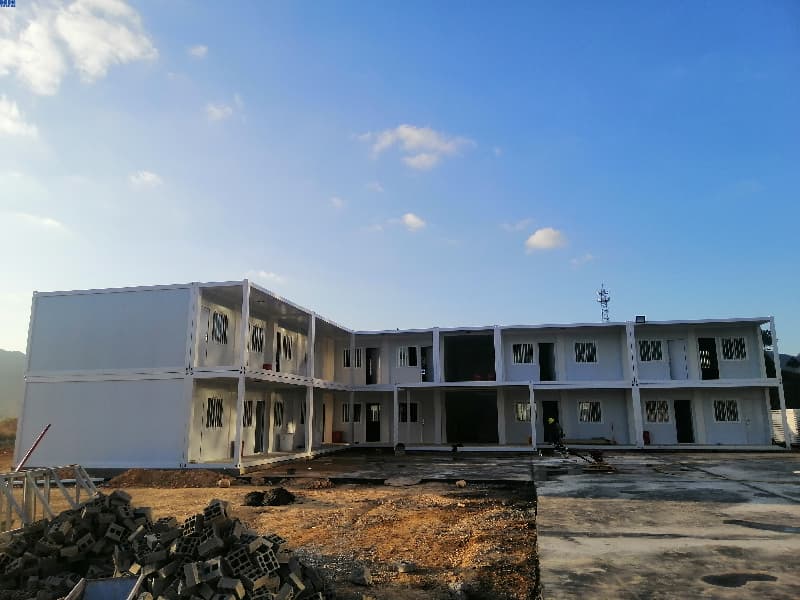
Wanbang supports different insulation configurations for modular building applications, including:
For larger workforce accommodation developments, insulation should also be considered across the entire camp. Dormitories, dining halls, offices, kitchens, and sanitation facilities may have different indoor temperature and ventilation requirements.
Through its modular camp solutions for mining and workforce accommodation, Wanbang helps project owners coordinate different building functions and technical configurations within one project.
The most suitable insulation solution is not necessarily the thickest or most expensive one. It is the configuration that meets the project's thermal requirements, fire-safety standards, moisture-control needs, transportation limitations, and long-term operating budget.
If you are planning a modular building project in an extremely cold, hot, or humid environment, share your destination country, expected temperature range, building application, and required quantity with Wanbang's technical and project team. This information helps determine a more suitable insulation material and panel configuration before production begins.
What insulation material is best for modular buildings in extreme climates?
Rock wool and PU are two strong options for extreme-climate modular buildings. Rock wool is particularly suitable when non-combustible insulation and sound absorption are important, while PU provides high thermal resistance within limited panel thickness. The final choice depends on climate, fire requirements, and project specifications.
Is rock wool better than EPS for modular buildings?
Rock wool generally offers better fire performance and sound absorption than EPS. EPS is lighter and often more economical. For industrial camps and projects with strict fire requirements, suitable non-combustible rock wool panels are often preferred. EPS may be appropriate when the project requirements and applicable fire regulations allow it.
Is PU insulation suitable for extremely cold climates?
Yes. PU insulation provides high thermal resistance per unit thickness and can be used in cold-climate modular buildings. The required panel thickness, joint sealing, window performance, and heating system should be designed according to the outdoor design temperature.
How thick should insulation be for a modular building in a cold climate?
A preliminary reference for colder climates is approximately 75–100 mm or more, depending on the material and performance target. Extremely cold projects may require substantially thicker roof and wall insulation. The final thickness should be determined through thermal calculations and local building requirements.
What is the best insulation for modular buildings in desert climates?
PU and properly designed rock wool insulation systems are both options for desert modular buildings. Roof insulation, solar heat gain, exterior finishes, air conditioning, and window performance should be considered together to reduce indoor heat and cooling demand.
Can EPS insulation be used in hot and humid climates?
EPS can be used in certain hot and humid environments if the complete panel assembly meets the project's thermal and fire requirements. Proper waterproofing, joint sealing, ventilation, and moisture control are essential to protect the building envelope.
Does thicker insulation always make a modular building better?
No. Thicker insulation generally improves thermal resistance, but it can increase material cost, panel weight, and reduce usable internal space. The best thickness depends on the climate, insulation material, building design, and required thermal performance.
Can Wanbang customize insulation materials for modular container houses?
Yes. Depending on the selected product and project requirements, Wanbang can discuss different insulation cores, including EPS, rock wool, and PU options, as well as different panel thicknesses and building configurations. The final materials and specifications should be confirmed before production.


 IPv6 network supported
Hi! Click one of our members below to chat on
 English
 Français
 Deutsch
 Русский
 Italiano
 Español
 Português
 Türk
 Ελληνικά
 Indonesia
 عربي



