
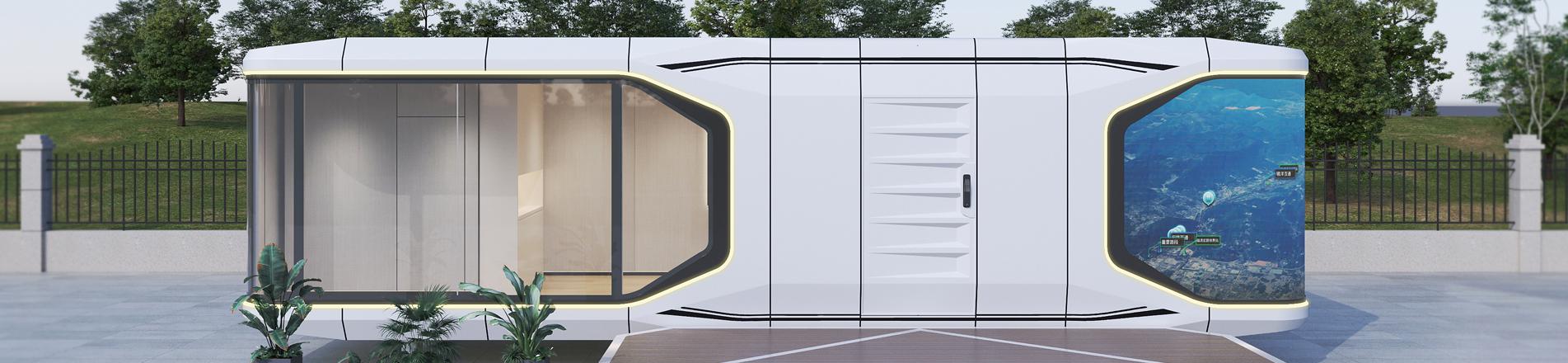
Prefabricated Houses for Earthquake Resilience
How modular construction is engineered for seismic conditions
Prefabricated houses, also known as modular buildings or earthquake-resistant container houses, are structures designed and built in sections (modules) in controlled factory environments before being transported and assembled on site. Their design can be engineered for seismic resilience, which makes them a practical option in regions prone to earthquakes. Here’s how they address seismic challenges:
Prefabricated homes often use flexible, durable materials such as steel frames, engineered wood, or composite materials. These materials can absorb seismic energy, reducing the risk of collapse. Modular components are connected with energy-dissipating joints and reinforced connections, allowing the structure to sway during tremors without breaking — a key to resisting lateral forces. Unlike traditional masonry, which is brittle, prefab structures have a higher strength-to-weight ratio, which helps minimize inertial forces during a quake.
Factory-based construction supports consistent adherence to design specifications and applicable building codes. Each module is inspected for structural integrity, including resistance to dynamic loads that simulate earthquake movements. This controlled process reduces human error on site, which is a common factor in building failures during seismic events.
Some prefabricated homes incorporate seismic base isolation techniques. Rubber or steel bearings installed between the foundation and the main structure absorb and dissipate earthquake energy. This “decoupling” reduces vibrations transmitted to the building, helping to protect both the structure and its occupants. For areas with soft soil, shallow foundations or screw piles can be used to improve stability and load distribution.
In disaster zones, prefabricated houses are valued for their quick assembly. Modules can be transported and erected in days or weeks, providing urgent shelter compared with the months typically needed for conventional construction. This is critical for post-earthquake recovery, offering safe temporary container housing while minimizing disruption to affected communities.
Beyond seismic design, modular construction can support efficient material use and energy-efficient designs. The modular nature allows easy expansion or reconfiguration, adapting to changing needs — an advantage in regions where aftershocks or future events may require structural adjustments.
Prefabricated houses combine engineering precision with seismic design to create safe, sustainable, and rapidly deployable solutions, offering practical options for earthquake-prone areas worldwide.
Looking for modular housing engineered for a seismic region? Contact us with your site conditions and local code requirements, and our engineers will help you confirm the right frame, connection and foundation design for your project.


 IPv6 network supported
Hi! Click one of our members below to chat on
 English
 Français
 Deutsch
 Русский
 Italiano
 Español
 Português
 Türk
Türk Ελληνικά
 Indonesia
 عربي
عربي


