Are container homes safe in earthquakes?
Apr 02, 2025
Are Container Homes Safe in Earthquakes? Let’s Break It Down
What determines whether a container home performs well in a seismic event
If you’re considering a container house — especially in earthquake-prone areas like Japan, New Zealand, or California — you may be wondering: can a steel modular building survive a quake? The answer depends less on the container itself and more on how it is engineered, modified and anchored. This article explains what makes a container home perform well in a seismic event, and what to watch out for.
1. Steel Has Natural Advantages in Seismic Design
Container houses are made of galvanized steel, which is flexible and corrosion-resistant. In an earthquake, rigid brick or concrete structures can crack or collapse, while steel frames can flex and absorb energy without breaking. Many earthquake-resistant high-rise buildings use steel frames, and a container house is essentially a small steel structure. With proper engineering, steel modular buildings can be designed to meet the seismic requirements of the local building code.
2. The Catch: Modifications and Anchoring
Containers are tough, but converting them into homes requires careful engineering. Common mistakes can seriously weaken the structure:
Cutting Too Many Openings: Oversized windows or doors cut into the walls remove critical load paths. Openings must be designed and reinforced by an engineer.
Stacking Without Reinforcement: A two-story container house needs columns, beams and connections sized for the loads. Without them, stability is compromised.
Skipping the Foundation: A container placed directly on the ground is not properly anchored. Concrete footings or piers with bolted or welded connections are needed so the structure can transfer loads to the ground as designed.
3. Smart Design Improves Seismic Performance
A well-designed modular building performs predictably in an earthquake when three things are in place:
Reinforcement: Bracing (such as X-bracing or L-shaped layouts) helps spread lateral forces through the structure.
Secure Connections: Modules are bolted together with engineered steel brackets — no improvised shortcuts. Connections are confirmed against the design calculations.
Lightweight Build: Steel panels are lighter than masonry walls, which can reduce the seismic forces the structure has to resist.
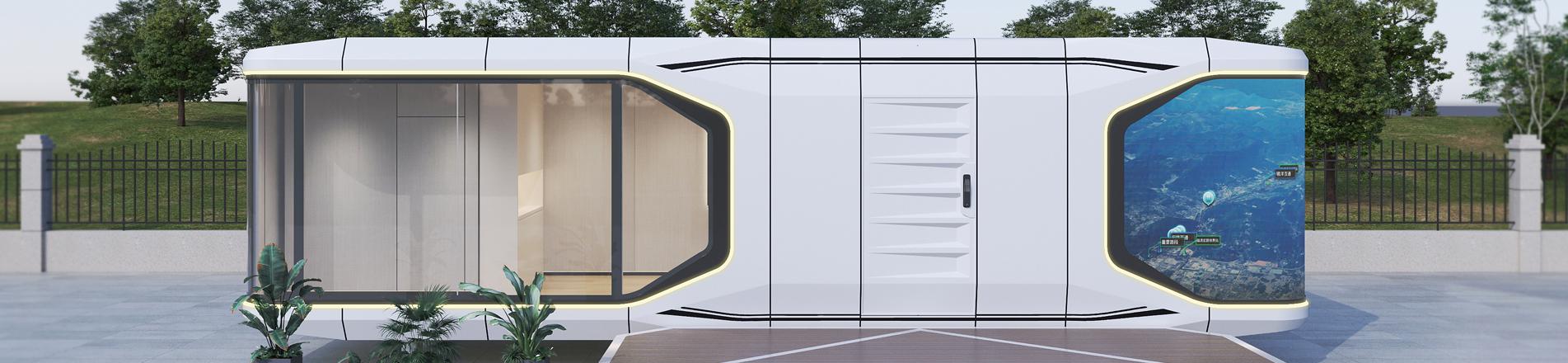
Projects like capsule houses and modular homes are examples of factory-built units where the steel frame, panels and connections are designed and produced together, rather than assembled from whatever parts happen to be on hand.
4. Red Flags to Avoid
Old, Rusty Containers: Corroded used containers can lose structural strength. If used units are involved, a proper inspection and refurbishment plan is essential.
Uncontrolled Modifications: Removing internal beams or combining steel frames with heavy masonry without engineering can create weak points.
Ignoring Local Codes: Seismic requirements vary by region. Confirm the project is designed and documented against the local building code, and involve professionals familiar with those standards.
5. Summary: Safe with the Right Engineering, Not by Default
Container homes can meet seismic safety requirements, but only with professional engineering and quality construction. Checklist:
Use new or properly inspected and refurbished units.
Have a structural engineer review reinforcement plans for openings, stacking and connections.
Anchor the unit to a proper foundation (concrete footings or piles) with engineered connections.
Keep interior additions light (e.g., drywall partitions rather than heavy masonry).
Final tip: It’s reasonable to watch your budget, but structural safety is not the place to cut corners. When comparing suppliers, ask how the frame, panel and connection design is engineered for your site’s seismic requirements, and verify the local code compliance of the proposed design.
Planning a modular building in a seismically active region? Contact us with your site conditions, building height and local code requirements, and our engineers will help you design a solution that meets the structural requirements of your project.
{
"@context": "https://schema.org",
"@type": "BlogPosting",
"headline": "Are Container Homes Safe in Earthquakes? Let's Break It Down",
"description": "What determines whether container homes perform well in earthquakes: steel frame behavior, modifications, anchoring, reinforcement, foundations and local code compliance.",
"image": "https://www.gdwbprefabhouse.com/storage/uploads/images/202504/02/1743584865_i7FM6eBIR9.jpg",
"author": {
"@type": "Organization",
"name": "Guangdong Wanbang Modular Building Co., Ltd."
},
"publisher": {
"@type": "Organization",
"name": "Guangdong Wanbang Modular Building Co., Ltd."
},
"mainEntityOfPage": {
"@type": "WebPage",
"@id": "https://www.gdwbprefabhouse.com/"
}
}
Read More



 IPv6 network supported
 English
 Français
 Deutsch
 Русский
 Italiano
 Español
 Português
 Türk
Türk Ελληνικά
 Indonesia
 عربي
عربي


