
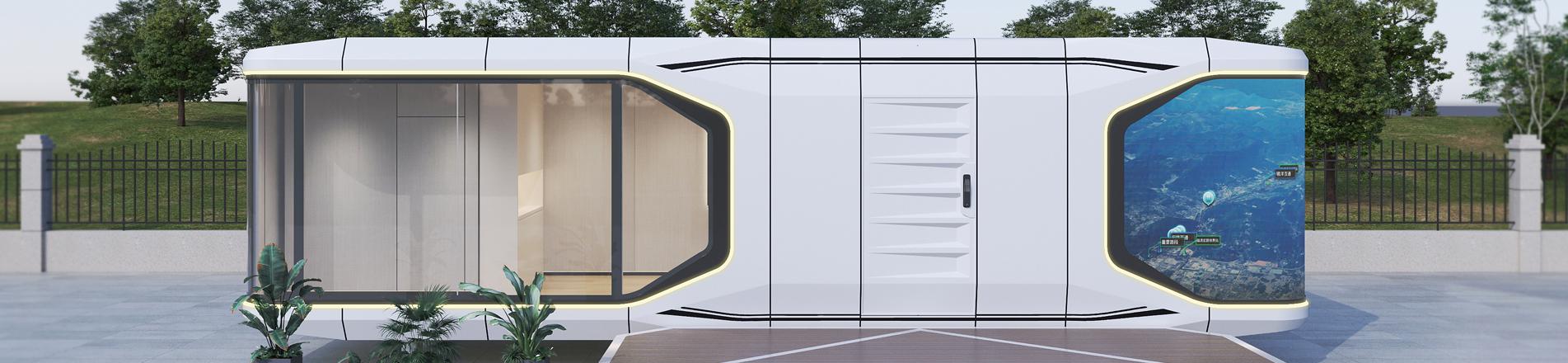
10 Things to Check When Choosing a Container House Manufacturer in China
A practical checklist for supplier due diligence
Establishing partnerships with credible manufacturers is pivotal when entering the container housing market. For buyers who are new to China’s industry landscape or supplier vetting process, this article summarizes the key factors to check when evaluating a container house manufacturer, and answers common questions. Use this checklist to navigate supplier selection with clarity and confidence.
A container house is a prefabricated, modular structure designed for residential, commercial, or industrial use, characterized by its standardized rectangular form and steel-frame construction. Unlike shipping-container-based homes, which repurpose decommissioned cargo containers, a true container house is engineered from the ground up using lightweight yet durable materials such as galvanized steel, aluminum, or composite panels. These structures prioritize functionality, rapid assembly, and adaptability, often incorporating features like foldable walls, stackable modules, and integrated utilities (plumbing, electrical, HVAC).
Key features include:
Common applications include affordable housing, worker accommodation, emergency shelters, retail and camp facilities, and mobile workspaces.
Market Leadership: China is one of the world’s largest producers of prefabricated housing, driven by urbanization and sustained demand for affordable and relocatable buildings.
International Presence: Chinese manufacturers export modular buildings to Southeast Asia, Africa, and the Middle East. For example, Myanmar and Indonesia use container houses for disaster relief and mining camps.
Trends:
Rather than comparing long supplier lists, focus on these 10 practical checkpoints. They will help you verify whether a manufacturer can deliver the quality, reliability and documentation your project needs.
| # | Checkpoint | What to Verify |
| 1 | Certifications | Ask for the factory’s quality management certificates (e.g., ISO 9001), check the issuing body, scope and validity date, and verify online where possible. |
| 2 | Factory & Capacity | Confirm production base locations, factory area and monthly output, and whether the factory can handle your order quantity. |
| 3 | Steel Frame Quality | Check beam and column steel grades, material thickness and galvanization, which determine structural reliability. |
| 4 | Panel & Insulation Options | Confirm wall panel type (EPS / rock wool / PU), thickness and fire rating, matched to your climate and code requirements. |
| 5 | OEM / Customization | Confirm the supplier can follow your drawings for layout, windows, doors, partitions, finishes and electrical configuration. |
| 6 | Lead Time & MOQ | Clarify minimum order quantity, production lead time after deposit, and how lead time scales with quantity and customization. |
| 7 | Export Experience | Ask about countries already served, export documentation, customs support and project references in your region. |
| 8 | Quality Control Process | Review the inspection procedure: incoming materials, in-process QC, pre-shipment inspection and third-party inspection support. |
| 9 | Logistics & Installation Support | Confirm packing, container loading plans, installation guidance or on-site supervision, and after-sales support. |
| 10 | References & Reviews | Ask for case studies or client references in your industry, and verify the supplier’s track record for similar projects. |
As an example of what to look for, Guangdong Wanbang Modular Building Co. supplies flat pack container houses, expandable units, foldable units, prefabricated houses and steel structure buildings. The company operates two production bases covering approximately 120,000 m², supports OEM/ODM customization, and holds ISO 9001 and ISO 14001 certifications. Wanbang has completed container house projects in countries including Zimbabwe, Indonesia, South Africa and Kenya, and offers site assessment, container plans, installation guidance and after-sales support.
Quality units use galvanized steel frames engineered for wind resistance and seismic loads. Final design parameters are confirmed against the project site’s wind, snow and seismic requirements.
Yes. Multi-story configurations are possible with project-specific engineering for stacking, connections and foundations. The design is finalized based on approved structural calculations.
Factory-built modules reduce construction waste compared with traditional on-site building. Many designs support solar panels and rainwater systems.
Requirements vary by destination and use. Work with your supplier and local authorities to confirm planning and building approvals for modular projects.
Pre-engineered components significantly reduce on-site construction time compared with traditional building. Final timing depends on quantity, design complexity and site conditions.
Yes. Container-based modules are widely used for site offices, camp facilities, retail and corporate accommodation.
Yes. Units are designed for disassembly, transport and reassembly, which is one of the key advantages of modular construction.
Cost Efficiency: Competitive pricing without compromising quality when the supplier is properly vetted.
Scalability: From single units to large modular building complexes.
Innovation: Chinese manufacturers are leaders in modular design, panel technology and smart integration.
Reliability: Established exporters provide documentation, QC and logistics support for international projects.
Procuring container houses begins with identifying a qualified manufacturer — a critical first step that lays the foundation for project success. If you need help comparing China container house suppliers or have specific inquiries about modular solutions, our specialist team is at your disposal for professional guidance.


 IPv6 network supported
Hi! Click one of our members below to chat on
 English
 Français
 Deutsch
 Русский
 Italiano
 Español
 Português
 Türk
Türk Ελληνικά
 Indonesia
 عربي
عربي


